When Love Isn’t Gentle: Nonviolent Parenting in the Real World


Before I became a mother, I didn’t imagine myself as a perfect parent. I knew my humanity would come with me.
But I did have hopes about the kind of parent I might be.
I hoped I would find gentleness easy.
I hoped I would have the spaciousness to offer choice, to move slowly, to stay present.
I imagined myself holding him whenever he needed me, avoiding screens for as long as possible, responding with softness even in the messy moments.
I wasn’t naïve about imperfection — I just didn’t realise how it would actually show up, or how quickly my ideals would be stretched by real life.
What I’ve noticed is that some moments of anxiety can be coupled with a sharp or urgent stress response in me : important signal to stop and listen to what may be happening inside. These moments point me to the edge where I start questioning the line between parenting from the energy of nonviolence and parenting with forcefulness.
There are three situations where this shows up most clearly for me:
Breastfeeding (which was deeply challenging, and something I ultimately chose not to continue)
Cleaning my son’s snotty nose when he’s struggling to breathe or sleep
Continuing to drive when he is distraught in the back seat — either because I can’t stop safely, or because I’m choosing to care for time, capacity, and my own energy rather than stopping to soothe him each time
I want to stay with the second example — an almost daily experience when he has a cold. I imagine many parents can relate to this.
When his breathing becomes stuffy and shallow, he snuffles, struggles, and grows frustrated in his own body. I try to respect whatever “no” he offers: the twist of his head, the flailing arms, the cry when anything comes near his face. I give him space to work it out on his own.
And then comes the moment where his frustration meets my anxiety. Where his discomfort activates something in me. Where my wish to protect him and my wish to soothe my own unease get tangled together.
Because I know that if I clear his nose, he’ll breathe freely again. He’ll settle. He’ll sleep. His whole system will soften. And yet getting there means holding his head still while he cries and resists.
It feels violent. It feels violating. And doing nothing can feel almost unbearable.
Every time I do it, my heart hurts. Every time I don’t, a different part of me hurts : the part that can’t bear watching him struggle when I could have helped.
When Nonviolent Parenting Stops Being Theoretical
This is where nonviolent parenting stopped being theoretical for me.
What complicates it further is that I honestly don’t always know where my action is coming from.
Is this a calm, protective response — or my own anxiety taking the lead? Am I supporting him ,or trying to make my discomfort go away?
Rather than arriving at a neat conclusion about the “protective use of force” : A key distinction in Nonviolent Communication that supports the use of force only to protect, and which can easily be misconstrued.. I find myself living in the question instead.
What I’m practising instead is slowing down. If not always in the moment, then before and after.
I try to check my energy. Am I rushed? Tight? Fearful?
And then, regardless of where I land, I focus on what happens next.
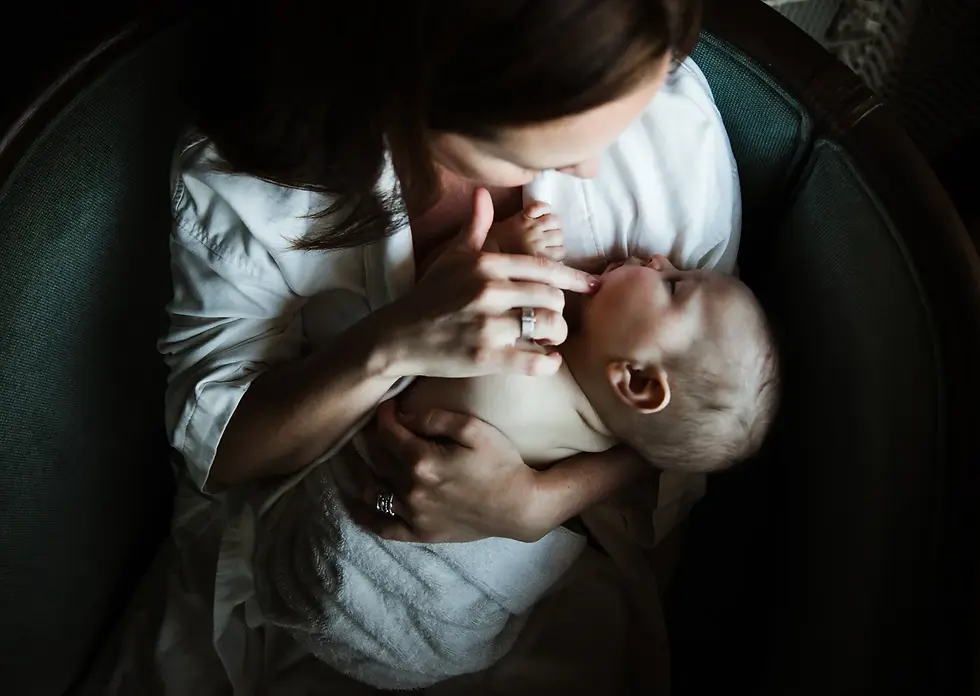
After I clear his nose, I hold him. I stay close. I let him cry in my arms rather than alone.
Sometimes, moments later, he’ll look up at me and smile.
I don’t know exactly what that smile means. Relief? Forgetting? Connection? My tone of voice?
What I do know is what it gives me.
It reminds me that the discomfort was transient. That the relationship wasn’t damaged. That staying with him afterwards ,in regulated presence, softness, and care : mattered deeply.
Staying With What We’ve Caused
And this is where something clicks for me, beyond parenting.
Because in adult relationships too, we inevitably do things that cause discomfort, even when we’re caring for real needs.
We set boundaries. We leave conversations. We choose ourselves. We act clumsily, defensively, imperfectly.
The question isn’t whether this will happen. It will.
The deeper question is how we stay with what we’ve caused.
Do we justify? Withdraw? Minimise? Or can we remain present : holding both the need we were meeting and the impact that landed?
Nonviolence Beyond Parenting
Parenting is deeply reminding me that nonviolence isn’t about avoiding discomfort or never causing pain at all. It’s about not abandoning each other when things have been hard.
I still don’t know exactly where the line is between protective use of force and forcing my own needs upon my son.. especially in the grey areas of parenting, like clearing his nose.
I don’t expect myself to always know how to meet him with the exact softness, presence, and respect that leads to fully consensual actions in all moments.
What I do know is that I’m learning to slow down, stay curious, and remain in relationship — with him, with myself, and with the people I love.
And maybe that, too, is a form of nonviolence.
Not purity. Not perfection. But presence ..especially after pain.
Where are you being asked to stay present ? Not perfect , in your relationships right now?


Comments